
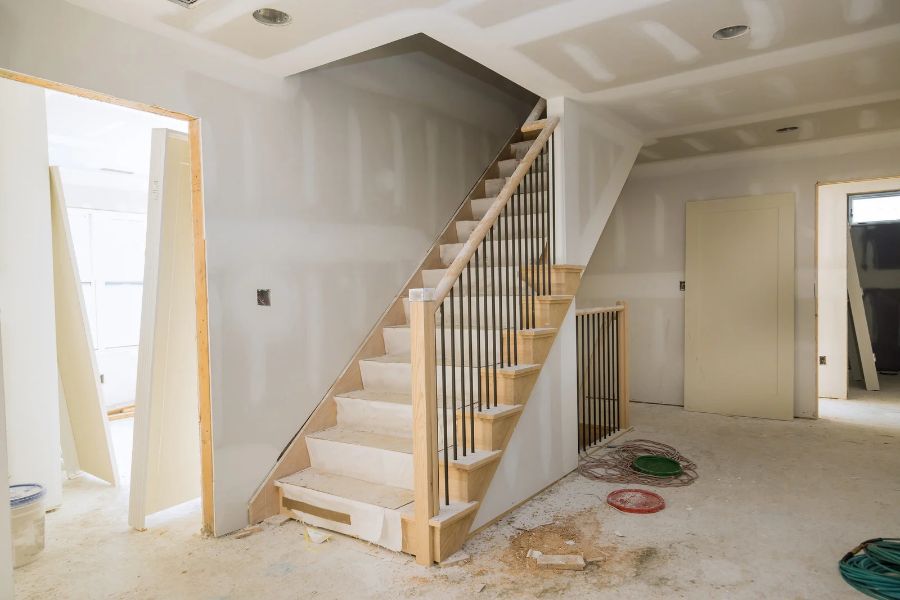
A finished basement, remodeled kitchen, or new electrical panel can be a big selling point when you’re buying a home. But there’s another question worth asking: Was the work permitted?
Depending on the project and where the home is located, certain renovations and repairs may require permits and inspections from the local building department.
That’s why permit history can provide another useful piece of information when you’re evaluating a home—especially when it looks like significant work has been done.
What Is a Permit Search?
A permit search looks at available records from the city, county, or other authority responsible for permits on the property.
Depending on the jurisdiction and the records available, a permit history may include information about work such as:
- Electrical upgrades
- Plumbing work
- HVAC installation or replacement
- Basement finishes
- Home additions
- Structural changes
- Roof replacements
- Other major renovations
Permit requirements vary by location and by the type of work being completed, so the absence of a permit doesn’t automatically mean something was done incorrectly.
But the records can help provide more context about the history of the home.
Why Does Permit History Matter When Buying a Home?
Imagine walking through a home with a beautifully finished basement. Everything looks relatively new, and the space may even be advertised as a major feature of the property.
Then you look at the available permit history and can’t find a record for the renovation.
Does that automatically mean there’s a problem? No.
But it may raise some additional questions.
Was a permit required when the work was completed? When was the renovation done? Were electrical, plumbing, or structural changes involved? Was the work completed by a licensed professional? Was the work inspected by the appropriate jurisdiction?
Those are useful things to know before you own the house.
A Permit Can Provide More Context
When permit information is available, it may help establish:
- What type of work was performed
- When the work took place
- Whether a permit was issued
- Whether required inspections were recorded
- Whether the available records appear consistent with what we’re seeing in the home
That last point can be particularly useful during a home inspection.
For example, a newer electrical panel may look like it was part of a recent upgrade, but permit records could show whether electrical work was actually permitted and what the scope of that work included. If we’re seeing changes that extend beyond what’s described in the permit, that’s something worth noting.
Or, a finished basement may include a new bathroom, additional electrical circuits, or changes to the home’s layout. If the available permit history only shows a permit for finishing the basement but nothing related to the plumbing or electrical work we’re seeing, that could raise additional questions.
An addition or converted space is another good example. Permit records may help clarify whether that room was originally built or converted as living space—and whether electrical, plumbing, HVAC, or structural work was included as part of the project.
None of these situations automatically means the work was done incorrectly. But when what we’re seeing in the home and what we’re seeing in the records don’t match, it’s useful for a buyer to know that before closing.
Does a Permit Mean the Work Was Done Correctly?
Not necessarily. A permit and a home inspection serve different purposes. A permit record may show that work went through the local permitting process, but that doesn’t mean a home inspector ignores it.
We still look at the current, visible condition of the home and its systems.
The reverse is also important: not finding a permit doesn’t automatically prove that work was completed improperly. Permit requirements and record availability vary, particularly depending on the type and age of the work and the jurisdiction.
That’s why we look at permit information as one piece of the puzzle, not the entire picture.
What If a Home Has Unpermitted Work?
Finding a renovation without an obvious permit record isn’t necessarily a reason to walk away from a home.
It is, however, something buyers may want to understand before closing.
Depending on the situation, additional questions or evaluation may be appropriate. Your home inspector can explain what they observed during the inspection, while your real estate agent can help you determine how the information fits into the transaction and what questions may need to be asked.
The goal isn’t to make a major issue out of every missing record. It’s to make sure you’re making a decision with as much information as possible.
A Home Inspection Is About More Than What You Can See
A home inspection is largely visual, but understanding a property can involve more than looking at what’s in front of us.
At Quality Building Inspections, our goal is to help buyers understand the home they’re purchasing, from the condition of its major systems to information that may warrant a closer look.
When available and applicable, permit history can add valuable context to what we’re seeing during the inspection.
Because sometimes, knowing what was done to a home and how it got there is just as useful as knowing what it looks like today.
Buying a home in the Denver metro area? Schedule your home inspection with QBI.