
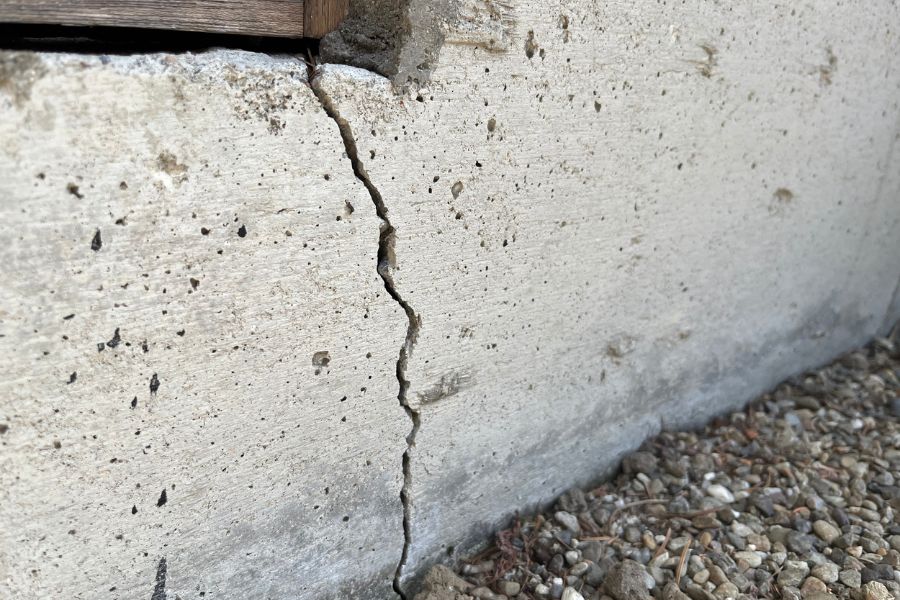
Few things catch a homebuyer’s attention faster than a crack in the foundation.
It’s understandable. A home’s foundation supports the entire structure, so seeing a crack can immediately raise questions about safety, future repairs, and whether it’s still the right home to buy.
The good news is that not every foundation crack is a sign of a major structural problem.
In fact, some cracking is a normal part of how concrete cures and how homes settle over time—especially here in Colorado.
The important question isn’t simply “Is there a crack?” It’s “What kind of crack is it, and what does it tell us?”
At Quality Building Inspections (QBI), that’s exactly what we evaluate during every home inspection.
Why Foundation Cracks Are Common in Colorado
Colorado presents some unique challenges for homes.
Much of the Front Range, including the Denver metro area, is built on expansive clay soils. These soils naturally expand when they absorb moisture and shrink as they dry. Over time, that seasonal movement places stress on foundations and can contribute to cracking and minor movement. Combined with Colorado’s freeze-thaw cycles and wide seasonal temperature swings, these conditions can place additional stress on a home’s foundation and structure.
Because of this, it’s not unusual for homes in Colorado to develop some foundation cracks during their lifetime.
That doesn’t automatically mean the home has a structural issue; it simply means the cracks deserve to be evaluated in context.
Not Every Foundation Crack Is Cause for Concern
One of the biggest misconceptions we see is that every crack means expensive foundation repairs are around the corner.
Fortunately, that’s often not the case.
Some cracks develop as concrete naturally cures after construction. Others occur as a home experiences minor settling over time. These types of cracks are often cosmetic and don’t necessarily affect the home’s structural integrity.
The presence of a crack alone doesn’t tell the whole story.
Instead, we’re looking at several factors together:
- The width of the crack
- The direction of the crack
- Whether one side has shifted relative to the other
- Signs the crack has grown over time
- Evidence of water intrusion
- Other conditions throughout the home that may point to foundation movement
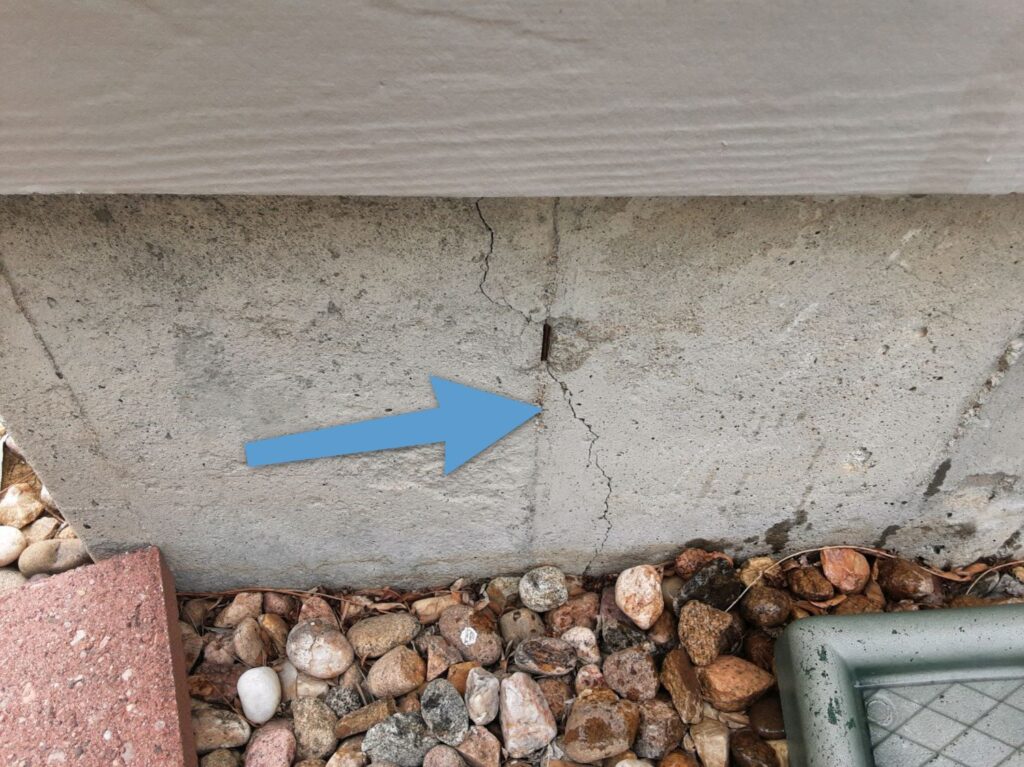
What Types of Foundation Cracks Are More Concerning?
While every home is different, certain crack patterns typically deserve a closer look than others.
| Crack Type | What It May Indicate |
| Hairline vertical crack | Often part of normal curing or minor settling |
| Vertical crack | Depends on width, movement, and surrounding conditions |
| Diagonal crack | May indicate settlement and should be evaluated in context |
| Horizontal crack | Often warrants closer evaluation because it can be associated with lateral pressure against the foundation wall |
| Stair-step crack (masonry) | May indicate foundation movement depending on location and severity |
Again, there isn’t a one-size-fits-all answer.
A small horizontal crack doesn’t automatically mean the foundation is failing, just as a vertical crack isn’t always harmless.
That’s why the overall pattern matters more than any single crack.
We Look Beyond the Crack
When we’re inspecting a home, we’re never focused on one crack in isolation.
Instead, we’re asking questions like:
- Are doors or windows sticking?
- Are floors noticeably sloping?
- Is there evidence of moisture entering the basement?
- Is the foundation wall bowing or leaning?
- Do multiple signs point toward ongoing movement?
- Are there exterior drainage issues contributing to the problem?
Sometimes a crack turns out to be a minor cosmetic issue.
Other times, it may be one piece of a larger picture that deserves additional evaluation by a structural engineer or foundation specialist.
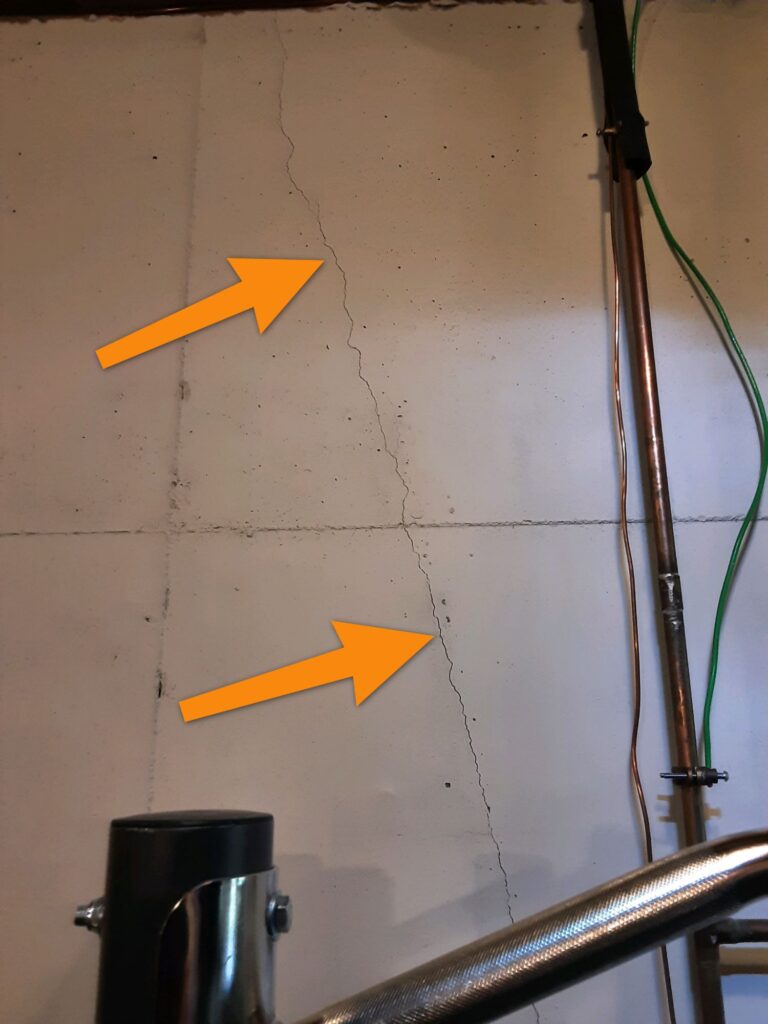
Should You Walk Away From a Home With Foundation Cracks?
Usually, no.
Many Colorado homes have foundation cracks and remain structurally sound for decades.
The key is understanding what you’re looking at before making a decision.
A thorough home inspection helps buyers understand whether visible conditions appear consistent with normal settling or whether additional evaluation is recommended before closing.
Our goal isn’t to tell you whether to buy the house. Our goal is to give you the information you need to make an informed decision and identify when additional evaluation by a qualified specialist may be appropriate.
What a Home Inspection Can—and Can’t—Tell You
A home inspection is a visual evaluation of the home’s accessible components.
During the inspection, we look for visible signs of cracking, movement, moisture intrusion, and other conditions that could indicate foundation concerns.
If we observe conditions that warrant additional investigation, we’ll explain what we’re seeing and recommend the appropriate next step.
It’s also important to understand that home inspectors are not structural engineers. Our role is to identify visible conditions that may indicate a concern—not to perform engineering analyses or determine how a foundation should be repaired.
Because every home is different, it’s important to remember that no home inspection is a “pass” or “fail.” Instead, it’s an opportunity to better understand the home’s current condition and identify items that may require maintenance, repair, or further evaluation by a qualified specialist.
The Bottom Line
Finding a foundation crack doesn’t automatically mean you should walk away from a home.
It does mean the crack deserves a closer look.
At Quality Building Inspections, we believe the most valuable part of a home inspection isn’t simply identifying defects; it’s helping buyers understand what those findings actually mean.
We don’t believe in creating unnecessary fear.
We believe in providing clear information, practical explanations, and the confidence to make an informed decision about one of life’s biggest investments.
If you’re buying a home in the Denver metro area, schedule a professional home inspection with QBI to gain a better understanding of the home’s overall condition, including the foundation.